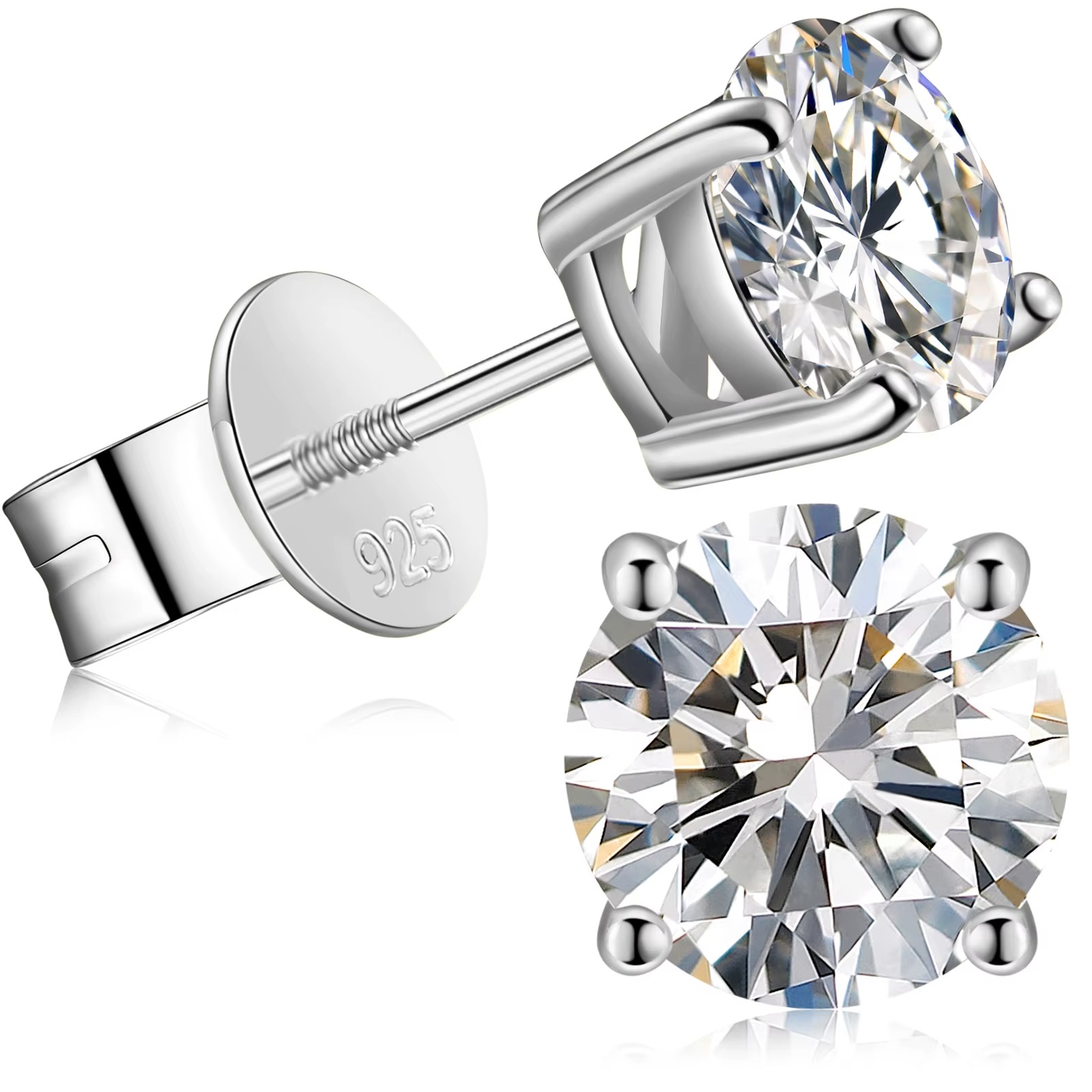
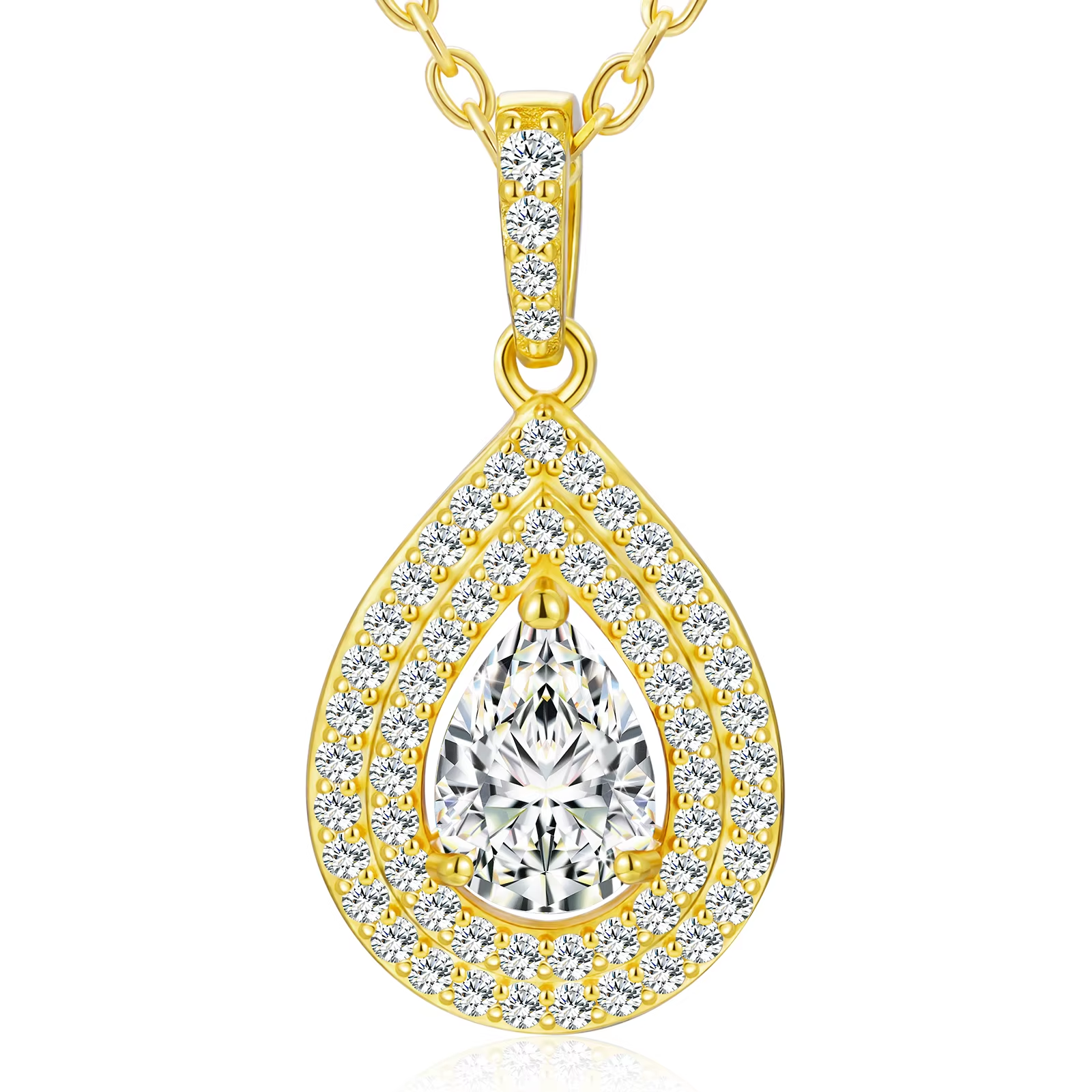
Moissanite is a naturally occurring gemstone made of silicon carbide (SiC) — first identified in 1893 inside a meteorite crater, and grown in laboratories for jewelry use since the late 1990s. It's the second-hardest gemstone on earth after diamond, and it produces more brilliance and "fire" (rainbow-colored light flashes) than diamond does. It is not a diamond, and it is not a diamond imitation — it's its own distinct mineral with a well-documented history and its own grading standards.
If you've landed here because you're trying to figure out whether moissanite is "real," whether it's the same as a lab-grown diamond, or whether it's a good choice for a ring you're about to buy, this guide covers all of it — accurately, without the sales pitch.
The Origin Story: A Meteorite Discovery
Moissanite's history starts somewhere unexpected: a meteor crater in Arizona. In 1893, French chemist Dr. Henri Moissan was examining rock samples from the Canyon Diablo meteorite site when he found tiny, glittering crystals he initially believed were diamonds. It took years of further analysis to determine they were actually a previously unknown mineral — silicon carbide. In 1905, the mineral was named moissanite in his honor. Moissan went on to win the Nobel Prize in Chemistry in 1906, though for unrelated work on fluorine isolation.
Naturally occurring moissanite is exceptionally rare — so rare that natural specimens large enough to cut into jewelry are essentially never found. Almost every moissanite gemstone sold today, including every stone we sell, is lab-created, not mined.
How Moissanite Is Made Today
Because natural moissanite is too rare to supply a jewelry market, the moissanite in modern jewelry is grown in controlled laboratory environments using advanced thermal crystal-growing processes that replicate the conditions under which silicon carbide forms. This isn't the same thing as manufacturing a glass or plastic diamond look-alike — the end result is a genuine crystalline silicon carbide gemstone, with the same optical and physical properties as the mineral Henri Moissan identified, just grown intentionally rather than found by chance in a 50,000-year-old meteorite impact.
This lab-created process is also why moissanite carries a meaningful ethical advantage for buyers who care about it: there's no mining involved, which means no mining-related land disruption, and no exposure to the supply-chain concerns that have historically dogged parts of the mined-diamond industry.
The Physical Properties That Make Moissanite Distinct
Hardness
Moissanite rates 9.25 on the Mohs hardness scale, where diamond sits at a perfect 10 and common sapphire/ruby sit at 9. That makes moissanite the second-hardest gemstone available for jewelry use — hard enough to resist scratching in an engagement ring worn every day, and hard enough that it will outlast the person wearing it with ordinary care.
Brilliance and Fire
This is where moissanite actually exceeds diamond, not just approaches it. "Brilliance" refers to how much white light a stone reflects; "fire" refers to how much it splits light into flashes of spectral color, like a tiny prism. Moissanite has a higher refractive index and significantly higher dispersion than diamond, which is why moissanite jewelry tends to throw more visible rainbow flashes in direct or bright light.
| Property | Moissanite | Diamond |
|---|---|---|
| Hardness (Mohs scale) | 9.25 | 10 |
| Refractive index (brilliance) | 2.65–2.69 | 2.42 |
| Dispersion (fire) | 0.104 | 0.044 |
| Formed from | Silicon carbide | Pure carbon |
Durability Over Time
Moissanite doesn't cloud, discolor, or lose its polish under normal wear. It's chemically stable and resistant to household chemicals in the way most fine jewelry stones are, though — as with any ring — the metal setting around it needs periodic checking, since prongs are the part of a ring most likely to loosen with years of wear, not the stone.
Moissanite vs. Cubic Zirconia: Not the Same Thing
Moissanite is frequently, and incorrectly, lumped together with cubic zirconia (CZ). They are not comparable. CZ is a synthetic compound (zirconium dioxide) with a hardness of only 8–8.5, a much lower refractive index, and noticeably less brilliance — it's a genuine diamond simulant, manufactured specifically to visually resemble diamond at low cost, and it tends to show wear (surface scratching, cloudiness) within a few years of regular use. Moissanite is a harder, more brilliant, longer-wearing mineral with its own independent identity, not a diamond stand-in.
Is Moissanite "Fake"? Addressing the Misconception
No. This is the single most common misunderstanding about moissanite, so it's worth being direct: moissanite is not a "fake diamond." It's a real, hard, brilliant, chemically distinct gemstone. The confusion usually comes from conflating three different things:
- Mined diamond — natural carbon crystal, extracted from the earth.
- Lab-grown diamond — chemically identical pure carbon, grown in a lab instead of mined. Still a diamond.
- Moissanite — a different mineral (silicon carbide) entirely, grown in a lab because natural supply is too rare to use commercially. Not a diamond, not trying to be marketed as one — an alternative gemstone in its own right.
None of these are "fake." A cubic zirconia stone or glass rhinestone would be the accurate example of a fake diamond simulant. Moissanite is a legitimate gemstone with its own name, its own mineral classification, and its own grading standards.
How Jewelers Tell Moissanite From Diamond
Because moissanite is such a good thermal conductor, older diamond-testing pens (which only measure thermal conductivity) can actually give a false positive and read moissanite as diamond. That's why the trade moved to combined thermal-and-electrical testers, which correctly separate the two based on electrical conductivity — diamond doesn't conduct electricity, moissanite does. Gemologists also look at moissanite's birefringence (double refraction) under magnification: because moissanite bends light into two rays as it passes through the stone, a trained eye can sometimes see a subtle "doubling" of the stone's back facets under a loupe — an effect diamond, which is singly refractive, doesn't produce.
Is Moissanite Right for You?
Moissanite makes the most sense if what you value is brilliance, durability, and value per dollar spent — a stone that will outshine a diamond of the same size in direct light, at a fraction of the cost, with zero mining impact. It's not the right choice if what you specifically want is a mined diamond for its rarity, resale market, or family tradition — moissanite is a different gemstone, not a diamond substitute, and it shouldn't be sold or bought as one. For everyone else, it's a genuinely excellent, well-understood, independently certified stone.
Every moissanite stone we sell is VVS clarity, D-color (colorless), and GRA certified, hand-set in solid S925 sterling silver. If you want to see how it actually looks in a finished piece, browse the full collection — or keep reading with our full moissanite vs. diamond comparison.
Frequently Asked Questions
Common Questions
Is moissanite a real diamond?
No. Moissanite is not a diamond at all — it's a different mineral, silicon carbide (SiC), with its own distinct chemical composition. Diamond is pure crystallized carbon. Moissanite is sometimes confused with lab-grown diamonds, but the two are not the same thing: a lab-grown diamond is chemically identical to a mined diamond, just grown in a lab, while moissanite is an entirely different gemstone that happens to look similar to diamond.
Is moissanite considered a 'fake' diamond?
No — that label is a common misconception. Moissanite isn't a diamond imitation made of glass or plastic; it's a genuine, naturally occurring mineral (extremely rare in nature) that's cultivated in labs for jewelry use, the same way lab-grown diamonds and lab-grown rubies are cultivated. It has real hardness, real brilliance, and its own certification standards. It's simply a different gemstone than diamond, not a fake version of one.
How long does moissanite last?
Moissanite is extremely durable and, under normal wear, lasts a lifetime. At 9.25 on the Mohs hardness scale, it resists scratching from everyday activity. It won't cloud, discolor, or lose brilliance over time the way some softer gemstones can — the biggest long-term maintenance concern is with the metal setting (prongs can loosen over years of wear), not the stone itself.
Can you tell moissanite apart from diamond with the naked eye?
For a well-cut, colorless (D-color) moissanite, most people cannot tell the difference at a glance. The one distinguishing trait some trained eyes notice in bright, direct light is moissanite's stronger 'fire' — it throws more rainbow-colored flashes than diamond, which tends to flash more white/grey light. Jewelers use specialized testers (see below) rather than the naked eye to confirm which gemstone they're looking at.
What does GRA certification mean?
GRA stands for Gemstone Research Association, an independent lab that grades and certifies moissanite and other lab-created gemstones for clarity, color, and cut. A GRA certificate is issued per stone and verifies what you're buying matches its stated grade. It's a different certifying body than GIA, which primarily grades natural (mined) diamonds — the two aren't interchangeable, but GRA plays a comparable verification role for the moissanite market.
Written by
Qureshi Jewelers Editorial Team
Our editorial team is made up of the same people who source, grade, and hand-set every GRA-certified moissanite stone we sell. We write from direct experience running a moissanite-focused jewelry business — inspecting stones, answering customer questions daily, and standing behind every certificate we issue.
Ready to see it in person?
Browse GRA-certified moissanite, hand-set in S925 sterling silver.