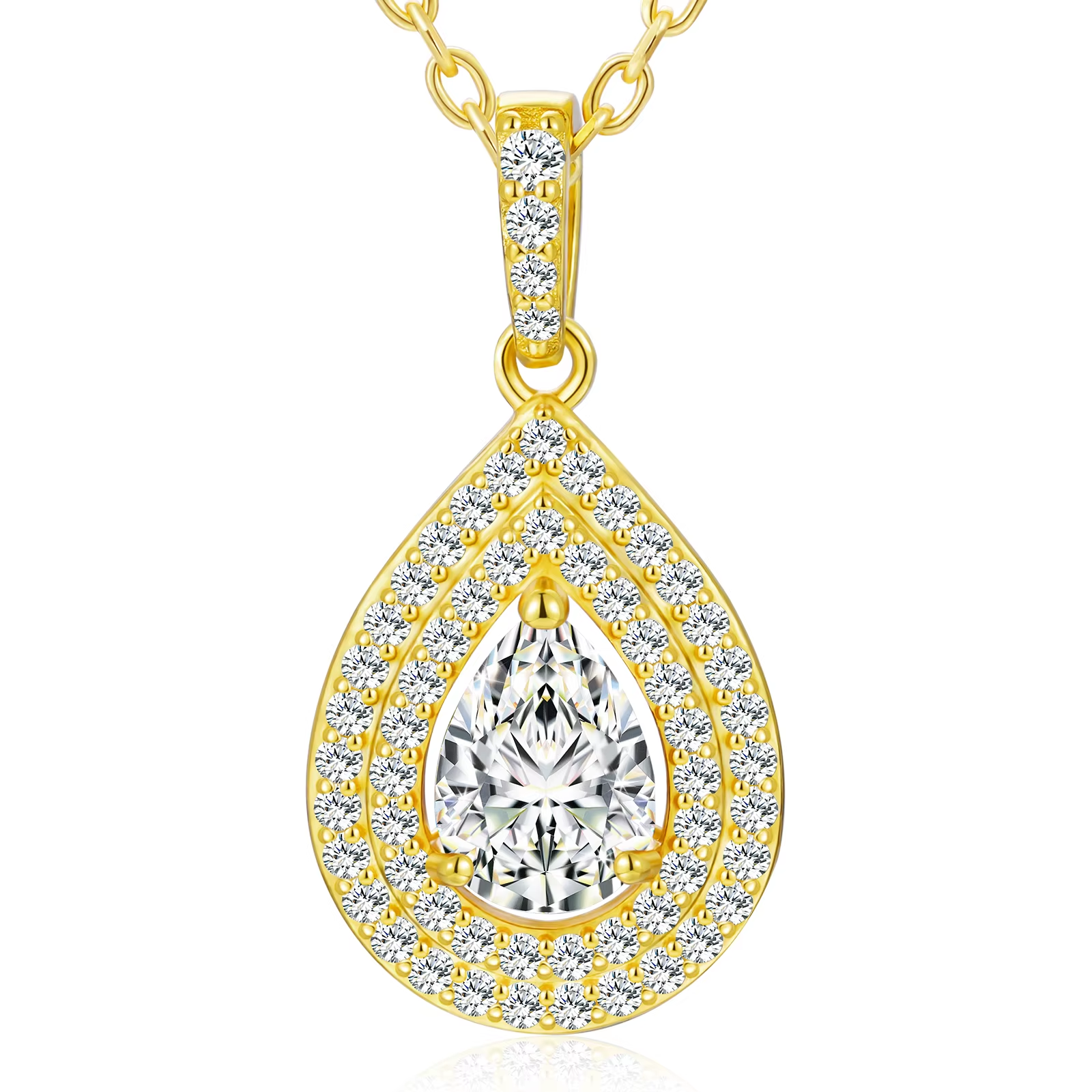
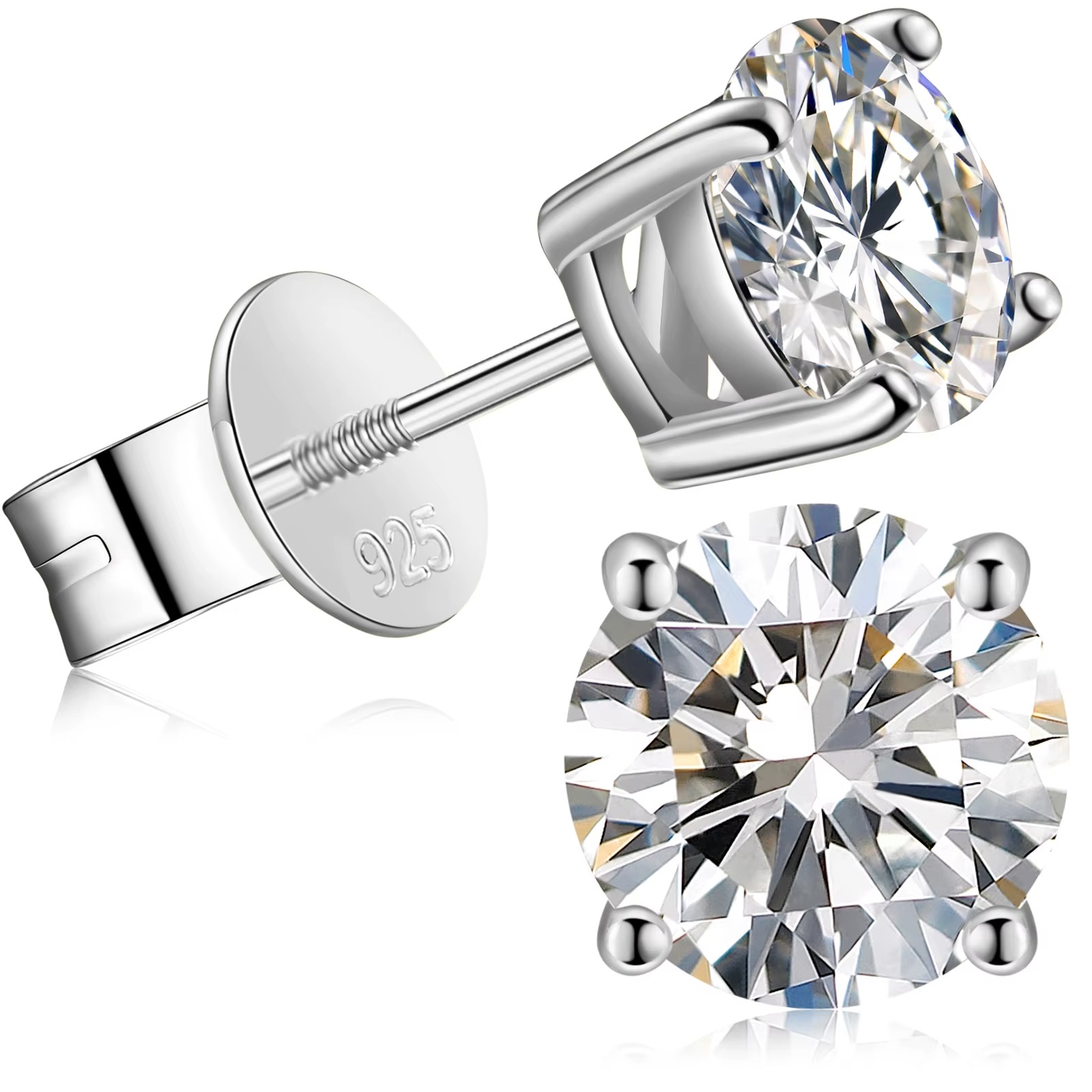
Moissanite is graded using clarity and color language borrowed directly from the diamond industry — terms like VVS and D-color — but because GIA doesn't issue standard grading reports for moissanite, that grading is done by labs that specialize in lab-created gemstones, most commonly GRA (Gemstone Research Association). Understanding what these grades actually mean is the difference between buying a stone that looks flawless and one that looks visibly tinted or included, even though both might be labeled "moissanite" on a listing.
Clarity Grades Explained
Clarity measures how many internal or surface characteristics (inclusions and blemishes) a stone has, and how visible they are. The scale runs, from best to lowest:
- FL / IF (Flawless / Internally Flawless) — no inclusions visible even under magnification. Extremely rare and not typically necessary for a beautiful stone.
- VVS1 / VVS2 (Very, Very Slightly Included) — inclusions so minor they're invisible to the naked eye and difficult to find even under 10x magnification. This is the grade we use across our collection, and it's considered fully eye-clean.
- VS1 / VS2 (Very Slightly Included) — minor inclusions, generally still invisible without magnification but easier to locate under a loupe than VVS.
- SI (Slightly Included) — inclusions may become visible to the naked eye, particularly in larger stones.
For virtually all buyers, VVS is the practical sweet spot: it looks completely clean to the eye without paying a premium for flawless grades that offer no visible difference in a finished piece of jewelry.
Color Grades Explained
Color measures how much yellow, green, or grey tint a stone has — the less, the better, and the more brilliant and "white" the stone looks. The scale (also borrowed from diamond grading) runs from D to Z:
| Grade | Description |
|---|---|
| D–F | Colorless — no detectable tint, the whitest and most brilliant appearance |
| G–J | Near colorless — tint is faint and hard to notice unless compared side-by-side with a colorless stone |
| K and below | Noticeable warm tint, increasingly visible to the naked eye |
This is the grade to pay closest attention to when buying moissanite specifically. Earlier generations of commercial moissanite were prone to a faint yellow or green cast, especially in larger stones — modern D-color moissanite is fully colorless and doesn't have that issue, but not every seller uses D-color stock. If a listing doesn't specify a color grade, ask before buying.
Cut: The Grade That Affects Brilliance the Most
Cut quality — how precisely a stone's facets are angled and proportioned — determines how much light gets reflected back to the eye versus lost out the sides or bottom of the stone. A poorly cut stone can look dull even with excellent clarity and color, while a well-cut stone maximizes brilliance and fire. Cut isn't standardized across the industry as tightly as clarity and color are, but reputable sellers grade it (commonly as Excellent, Very Good, or Good) and it's worth confirming before buying, especially for a center stone in an engagement ring.
What a GRA Certificate Actually Verifies
A GRA certificate is issued per stone and documents its clarity grade, color grade, cut, carat weight (or millimeter size), and confirms it's genuine lab-created moissanite rather than a lower-grade simulant. It's the paper trail that lets you verify a seller's claims rather than taking a product description at face value — every stone we sell ships with one.
What to Prioritize When Buying
- Color first. D-color (colorless) makes the single biggest visible difference in how bright and "white" a stone looks.
- Clarity second. VVS is eye-clean and indistinguishable from flawless grades to the naked eye — no need to pay more for FL/IF.
- Cut third. A well-cut VS stone can outshine a poorly cut VVS one — ask about cut grade, not just clarity and color.
- Always ask for certification. A GRA certificate (or equivalent) confirms the grades match what you're paying for.
Every piece in our collection is VVS clarity, D-color, and GRA certified as standard — not an upgrade option. See the full collection, or read our price guide to understand how these grades translate into what you'll actually pay.
Frequently Asked Questions
Common Questions
What does VVS mean for moissanite?
VVS stands for 'Very, Very Slightly Included' — a clarity grade meaning any internal or surface characteristics are so minor they're not visible to the naked eye, only under magnification (typically 10x). It's a term borrowed from the diamond clarity scale and applied to moissanite by grading labs. VVS is generally considered eye-clean, meaning the stone looks flawless in normal wear.
What is D-color moissanite?
D-color is the highest, completely colorless grade on the scale used for both diamonds and moissanite — meaning the stone has no detectable yellow, green, or grey tint, even under close inspection. It's the grade that produces the purest white brilliance and the most visible fire, since color tinting can mute a stone's overall sparkle.
Does GIA certify moissanite?
No — GIA (the Gemological Institute of America) is best known for grading natural, mined diamonds and does not issue standard grading reports for moissanite. Moissanite is certified by labs that specialize in it, most commonly GRA (Gemstone Research Association), which grades and certifies clarity, color, and cut for lab-created gemstones including moissanite.
Is all moissanite the same quality?
No. Moissanite quality varies meaningfully by clarity grade, color grade, and cut precision, the same way diamond does. Older or lower-grade moissanite, in particular, can show a noticeable yellow or greenish tint, especially in larger stones — a well-graded, certified D-color stone looks dramatically different from an ungraded or off-color one.
Why does color grade matter so much for moissanite specifically?
Because moissanite's whole appeal is its brilliance and fire, and body color mutes both — a tinted stone looks duller and less white even if it's still technically eye-clean on clarity. Since moissanite is graded on the same D-to-Z color scale diamonds use, prioritizing D-color (or close to it) is the single biggest factor in getting the bright, colorless look most buyers actually want.
Written by
Qureshi Jewelers Editorial Team
Our editorial team is made up of the same people who source, grade, and hand-set every GRA-certified moissanite stone we sell. We write from direct experience running a moissanite-focused jewelry business — inspecting stones, answering customer questions daily, and standing behind every certificate we issue.
Ready to see it in person?
Browse GRA-certified moissanite, hand-set in S925 sterling silver.